
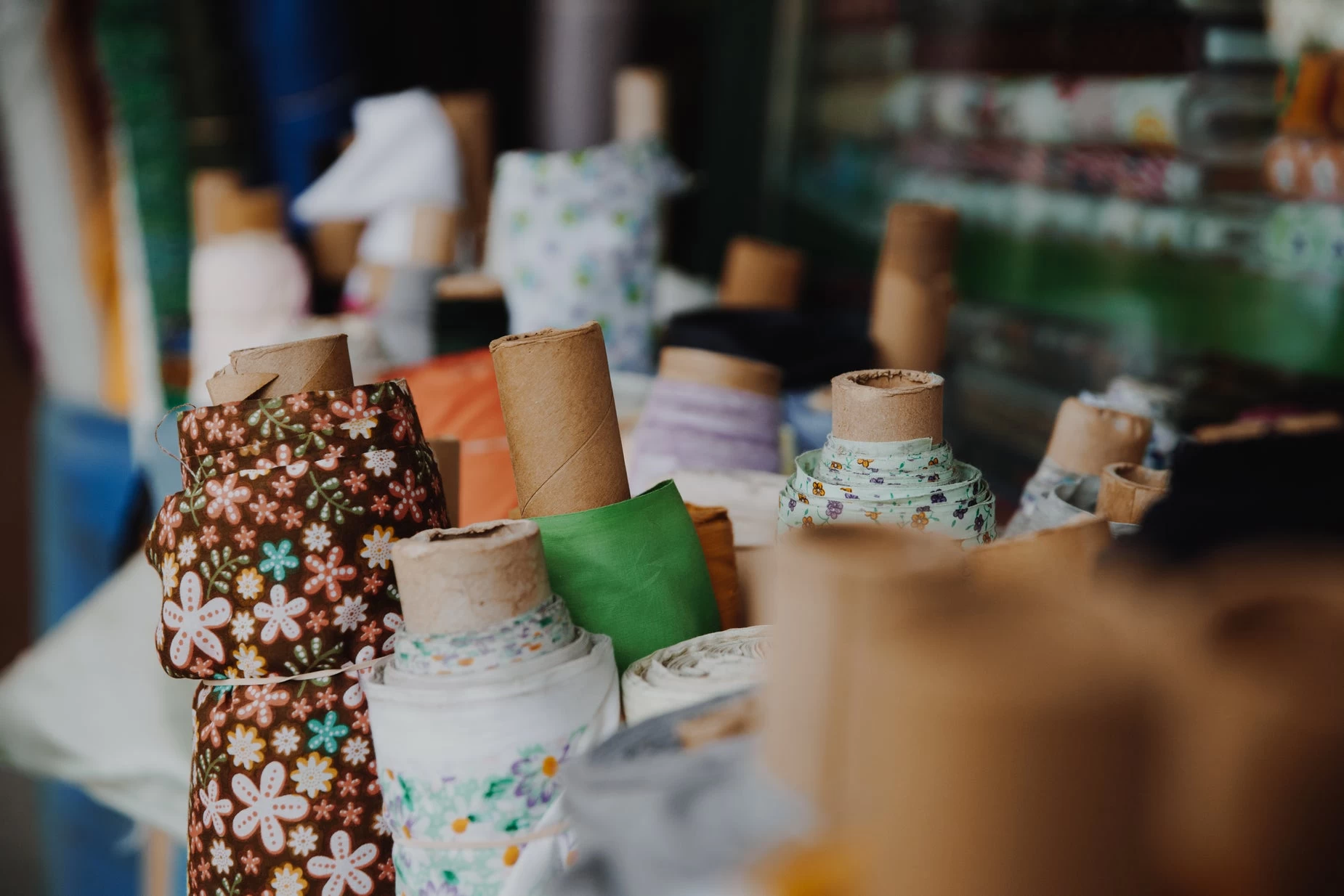
Quick answer: The minimum order quantity on activewear and down outerwear is almost never set by the sewing line — it is set by the fabric and trim minimums underneath it. Knitted performance fabrics commonly start at 300–500 kg per colour, down-proof shell fabrics at 500–1,000 m per colour, and a single dyed-to-match zipper tape can force a larger run than the garment itself. A realistic first order for a coordinated activewear or down program lands at 300–500 pieces per style per colour, split across a size ratio rather than ordered as a single size.
The questions we are asked most often by new buyers are not about stitching or fabric. They are about numbers: How many pieces do I have to order? Why is the number what it is? Can I start smaller and grow?
This guide answers those questions from the factory floor outward. It is written for brand owners, sourcing managers and product developers who are placing a first or second order and want to understand the commercial logic before they commit to a purchase order.
In this article
- What actually sets the minimum
- Fabric and trim minimums, by material
- Size ratio: the number buyers forget to plan
- Why colour multiplies the minimum
- Tiered ordering: how to start smaller
- Structuring a first order that scales
- Down outerwear: the extra MOQ drivers
- MOQ negotiation checklist
- Frequently asked questions
What actually sets the minimum
A garment factory can sew one piece. What it cannot do is buy one piece of fabric. The minimum order quantity you are quoted is a rolled-up number — it is the point at which every input in the bill of materials becomes commercially available at a sensible price.
Four constraints stack on top of each other:
- Mill minimums. Knitting mills and weaving mills sell by weight or by length, and they have their own minimums before they will schedule a run.
- Dye lots. Fabric must be dyed in a single continuous lot, or colour will drift between rolls. One dye lot = one minimum.
- Trim minimums. Zippers, elastics, moulded hooks, heat-transfer logos and custom packaging each carry their own minimum, often expressed in thousands of units.
- Cutting and setup efficiency. Spreading, cutting and marker-making have a fixed cost per style. At very low volumes this fixed cost dominates the unit price.
The practical consequence: when a buyer asks "what is your MOQ" and receives a single number, that number is a summary of the inputs. To negotiate it down, you have to change an input — not argue about the number.
The rule of thumb: in most programs the fabric bill of materials represents 50–65% of the garment's cost, and fabric is also the input with the least flexible minimum. Lead your MOQ negotiation with fabric and trim, not with labour.
Fabric and trim minimums, by material
The table below shows the ranges we work with on a daily basis. Treat them as planning figures for a Chinese apparel manufacturer operating at export scale — they move with mill availability, season and colour choice.
| Input | Typical minimum | Unit | Why it is set here |
|---|---|---|---|
| Knitted performance fabric (nylon/spandex, polyester/spandex) | 300–500 | kg per colour | Circular knitting run length; below this the mill cannot justify a yarn package setup. |
| Compression / high-gauge knit (sculpt, airlift type) | 400–600 | kg per colour | Slower machine speed and tighter gauge tolerance; higher scrap rate. |
| Down-proof shell fabric (woven, calendered) | 500–1,000 | metres per colour | Woven loom minimum plus down-proof coating or calendering run width. |
| Down-proof lining | 500–1,000 | metres per colour | Same loom constraint; must be dyed to match shell where visible. |
| Rib / cuff / collar knit | 200–400 | kg per colour | Flat-knit or circular rib minimum, separate from the body fabric. |
| Custom zipper (dyed-to-match tape) | 2,000–5,000 | pieces | Tape dyeing and slider assembly setup; the single most common MOQ amplifier. |
| Moulded hooks, adjusters, cord locks | 3,000–10,000 | pieces | Injection mould tooling amortisation. |
| Heat-transfer / silicone logo | 500–1,000 | pieces | Plate or screen setup; digital alternatives can go lower. |
| Woven main label + care label | 3,000–5,000 | pieces | Loom and printing setup on narrow fabric. |
| Custom polybag / hangtag | 3,000–5,000 | pieces | Printing plate setup; often shared across styles to reduce impact. |
Read the table vertically and a pattern appears: the trim minimums are almost always higher than the fabric minimums. A buyer planning 300 pieces of a down jacket may find that the dyed-to-match zipper alone requires 2,000 pieces — which means either accepting a much larger run, or switching to a stock colourway zipper.
Practical move: before you design around a custom trim, ask the factory for the trim's minimum independently. Two questions — "what is the fabric MOQ?" and "what is the zipper tape MOQ?" — will prevent most first-order surprises.
Size ratio: the number buyers forget to plan
MOQ is usually quoted per style per colour, and that quantity is then divided across a size ratio. The ratio is a commercial decision with real consequences, and it is the single most common source of stockouts on a first order.
Most first-time buyers default to an even split — 100 pieces means 20 of each of five sizes. That is almost always wrong. Consumer demand follows a bell curve, and the middle sizes carry the volume.
A starting ratio we see work well for women's activewear and outerwear in Western markets:
| Size | Share of order | Out of 500 pieces | Note |
|---|---|---|---|
| XS | 7% | 35 | Keep minimal; extend only after sell-through data. |
| S | 18% | 90 | First size with meaningful demand. |
| M | 28% | 140 | Volume driver — do not under-buy. |
| L | 26% | 130 | Nearly equal to M in activewear. |
| XL | 15% | 75 | Growing faster than the classic curve suggests. |
| 2XL | 6% | 30 | Optional on a first order; check your market. |
| Total | 100% | 500 | Adjust to your own historical sell-through once available. |
Two adjustments are worth flagging:
- Activewear skews larger than fashion. In sports bras and leggings, the S–L band can be tighter on the larger end of the curve than a comparable ready-to-wear style.
- Down outerwear skews toward layering. Buyers often size up to fit over knitwear, which shifts volume toward M and L and reduces XS.
If you are selling into a market where you already have sales history, use it. If you are launching, ask your factory what ratios they see for comparable styles — a manufacturer shipping to multiple Western brands has a view you cannot get from a spreadsheet.
Ratio and MOQ interact. A factory quoting 300 pieces minimum per style may require that each size within the ratio meets its own minimum. A 300-piece order split seven ways gives 43 pieces per size, which some lines will accept and some will not. Confirm the per-size minimum, not only the per-style minimum.
Why colour multiplies the minimum
This is where most first-order budgets break. MOQ is normally per colour, because fabric is dyed in lots and each colour is a separate dye lot.
The arithmetic is unforgiving. If the fabric minimum is 400 kg per colour, and 1 kg of fabric makes roughly 3–4 leggings, then one colour supports about 1,200–1,600 pieces of that style. Three colourways means three separate dye lots, three separate minimums, and a total commitment three times larger.
Down outerwear is more exposed here than activewear, for two reasons: shell fabric is woven and carries a higher per-colour minimum, and the shell colour must be matched by the lining, the zipper tape, the cord and the thread. Every one of those is a separate matching problem.
| Colour strategy | Effect on MOQ | When to use it |
|---|---|---|
| Single colour launch | Lowest possible minimum | First order, unproven product, testing demand. |
| Two colours (core + accent) | Roughly 2× single | Standard first order with a hero colour and one alternative. |
| Full seasonal palette (4–6 colours) | 4–6× single | Established styles with known sell-through. |
| Carry-over colour + new colour | Reduces new-colour risk | When a previous colour is reordering well — ride it and add one. |
| Stock colourway fabric | Can cut minimum significantly | When exact shade matching is not brand-critical. |
Where colour helps you: if a colour is a stock mill shade rather than a custom shade, some mills will sell from existing stock and bypass the dye-lot minimum. Ask specifically whether your colour is "stock" or "custom dye". The price difference per metre can be small; the minimum difference can be large.
Tiered ordering: how to start smaller
Many buyers assume the only options are "meet the MOQ" or "do not place the order". In practice a factory that wants the relationship will structure a tiered entry. The four mechanisms below are the ones that actually move the number.
1. Small-batch pilot run
A pilot of 100–150 pieces, typically in one colourway and a truncated size ratio, produced on the same line and with the same materials as the eventual bulk order. This is not a sample — it is real production at low volume, and it lets you test sell-through before committing to the full minimum.
2. Split across styles on shared fabric
If two or three styles use the same fabric and colour, they can share one dye lot. Instead of 400 kg minimum per style, you commit 400 kg total and split it across the range. This is how coordinated activewear sets — leggings, shorts and a matching top — are often launched economically.
3. Stock trim substitution
Replacing a dyed-to-match zipper with a stock colourway, or a moulded custom hook with a stock equivalent, removes the highest minimum in the bill of materials. The visual difference is frequently smaller than buyers expect; the minimum difference is often an order of magnitude.
4. Staged commitment
Some factories will accept a smaller first order against a documented intent to reorder — a signed indication of a second order within a defined window. This shifts risk onto the relationship rather than the run. It requires a factory that trusts the buyer, and it is worth asking for directly.
What does not work: asking a factory to cut the minimum without changing any input. If the fabric, trim and colour plan are identical, the minimum is arithmetically fixed. Negotiation that succeeds is always structural — you are changing what goes into the garment, not the price of the number.
Structuring a first order that scales
A first order should be designed for what happens next, not only for what ships now. The most reliable structure we see is this:
| Stage | Quantity | Colour | Purpose |
|---|---|---|---|
| Pilot | 100–150 pcs | 1 hero colour | Validate fit, fabric hand-feel and sell-through at low risk. |
| First production | 300–500 pcs per style | 1–2 colours | Establish the style commercially; build sell-through data. |
| Core replenishment | 500–1,000 pcs per style | Carry-over colour | Reorder what worked; add one new colour. |
| Range expansion | 1,000+ pcs per style | Full palette | Apply proven ratios and materials across the range. |
The critical detail is that the pilot and the first production run should use the same fabric, the same trims and the same factory line. A pilot that is hand-made in a sample room tells you almost nothing about the production version. Ask explicitly whether the pilot will run on a production line.
Second, protect the replenishment. When you place a first order, ask how long the fabric and trim will remain available. Reordering a colour six months later can mean a new dye lot, a new minimum, and a visible shade difference against inventory you already hold. Where possible, agree a reorder window in writing at the time of the first order.
Planning your first activewear or down outerwear order?
Send us your target styles, colours and quantities. We will tell you the real minimum for your bill of materials — fabric, trims and all — before you commit to anything.
Down outerwear: the extra MOQ drivers
Down outerwear carries three minimum drivers that activewear does not, and buyers moving from a knitwear program to a down program are frequently caught out by them.
Fill lots
Responsible Down Standard (RDS) certified down is purchased by lot, and lots are large. A buyer requesting 700 fill power goose down in a specific cluster size is drawing from a purchasing pool sized in hundreds of kilograms. Where the fill specification sits at the edge of what is commonly stocked, the effective minimum rises.
Baffle and quilting setup
Baffle construction — the channels that hold the fill — requires a specific marker and specific machine setup per panel dimension. Changing baffle width between styles means a new setup. Keeping baffle dimensions consistent across a range lets multiple styles share the setup cost.
Colour-matched hardware
A down coat typically carries a front zip, two pocket zips, a cord lock, cord ends, and often a moulded buckle on a belt. Where all of these are dyed to match the shell, each is an independent minimum. Standardising hardware colour across a range — or choosing a contrasting hardware colour deliberately — can remove several minimums at once.
Cross-reference: for how the fill specification itself is written and verified, see our guide to down jacket fill power, fill weight and baffle construction.
MOQ negotiation checklist
Use this before your next quotation request. Each line is a question that has cost buyers money by going unasked.
| # | Question | What you are protecting against |
|---|---|---|
| 1 | Is the quoted MOQ per style, per colour, or per order? | Assuming a number that multiplies unexpectedly. |
| 2 | Is there a separate minimum per size within the ratio? | A ratio that cannot be produced as planned. |
| 3 | Which single input in the BOM sets the MOQ? | Negotiating the wrong line item. |
| 4 | Is my fabric a stock shade or a custom dye? | Paying a custom-dye minimum for a stock colour. |
| 5 | What is the zipper / trim minimum, quoted separately? | The most common late-stage MOQ surprise. |
| 6 | Can styles share a dye lot if the fabric matches? | Paying a minimum per style instead of per fabric. |
| 7 | Is a pilot run available on a production line? | Testing with a sample that does not predict bulk. |
| 8 | How long is the fabric and trim available for reorder? | Sell-through success you cannot replenish. |
| 9 | What is the unit price at 2× and 3× the MOQ? | Discovering the price curve only after committing. |
| 10 | Does the MOQ change if I accept a longer lead time? | Missing a lower-minimum production window. |
Frequently asked questions
What is a typical MOQ for activewear?
For a Chinese manufacturer at export scale, plan on 300–500 pieces per style per colour as a realistic first production order. Below that, the fabric and trim minimums usually become the binding constraint rather than the sewing line.
Is the MOQ for down jackets higher than for activewear?
Usually yes, or at least it is more prone to being driven upward by trims. Down-proof shell fabric carries a higher per-colour minimum than a circular knit, and down outerwear generally carries more colour-matched hardware — zips, cord locks, buckles — each with its own minimum.
Can I order one size only to hit the MOQ?
You can, but it is rarely a good idea. A single-size order produces no usable demand data, and some factories will not accept it because it distorts their cutting efficiency. If you want to minimise risk, reduce the colour count and keep a workable ratio instead.
How much does unit price fall as quantity rises?
It depends which constraint you are relieving. Moving from below-minimum to at-minimum is the largest single step, because you stop paying a setup penalty. Beyond that, the curve flattens — expect modest reductions from doubling or tripling an at-minimum order. Always ask for the price at 2× and 3× before you decide, so you can see the actual curve rather than assume it.
Does a lower MOQ mean lower quality?
Not inherently — a pilot run on a production line uses the same operators, machines and materials as bulk. What a lower MOQ does mean is less favourable unit economics and less flexibility in materials, because low-minimum inputs are frequently stock items rather than custom ones.
Get the real minimum for your bill of materials
Share your styles and colours and we will break the minimum down by fabric, trim and colour — so you can see exactly which input is setting the number, and whether it can be changed.